It started with a puzzle.
Ross Creative Media began with family.
Our family has always enjoyed books, games, puzzles, and the simple pleasure of sitting down and figuring something out. One of the puzzles that became part of our daily routine was the cryptogram — a puzzle where every letter has been replaced by another, leaving a seemingly impossible jumble of words to unravel.
There is something deeply satisfying about watching a cryptogram come into focus. A few letters become a word. A word becomes a phrase. And suddenly, what looked like nonsense makes perfect sense.
We liked solving them.
Then we couldn't find enough good ones.

A problem worth solving
A few years ago, our parents were spending their winters in Florida. Their local newspaper had always provided a daily cryptogram, until one day the puzzle disappeared.
So we made our own.
Every weekend, we created a week's worth of puzzles and sent them by email. Before long, we were making puzzles not just for our parents, but for an expanding circle of family and friends.
Something unexpected happened along the way: we discovered that we enjoyed making puzzles almost as much as solving them.
We started paying attention to what made a puzzle satisfying. How difficult should it be? How should it be presented? How much space does a solver actually need? What makes a puzzle challenging without becoming frustrating?
We studied puzzles in newspapers, online, and in books. We built an online cryptogram game of our own. We tested ideas with the people who solved our puzzles.
And we kept learning.
From puzzles to publishing
Eventually, we took everything we had learned and put it into a book.
That first book was the beginning of Ross Creative Media.
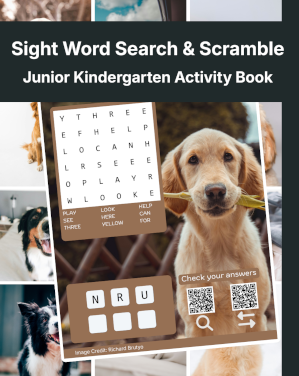
Since then, puzzles have remained at the heart of what we do. We've created more than a dozen puzzle books for adults, along with puzzle and activity books designed specifically for younger learners.
Along the way, we've learned something that extends well beyond puzzles:
Good creative work benefits from being designed as carefully as it is created.
The words matter. The layout matters. The difficulty matters. The experience matters.
Whether we're creating a cryptogram for an experienced solver or a first word search for a young reader, we think about the person on the other side of the page.
Puzzles were where we began. They aren't where we end.
Today, Ross Creative Media is taking what we've learned in puzzles and applying it in new directions.
We're developing syndicated puzzle content for newspapers and publishers, helping bring thoughtfully designed puzzles back to readers who still enjoy the experience of solving them.
We're creating children's books that turn learning into something children can actively enjoy — carefully designed activities that encourage young readers to explore, solve, and succeed.
And we're writing fiction: stories built to engage readers, reward curiosity, and give them a reason to turn one more page.
The formats are different. The audiences are different.
But the goal is the same.
Make something worth spending time with.
We live in a world competing relentlessly for people's attention.
We'd rather earn it.
A good puzzle can make someone stop and think. A well-designed children's book can turn practice into play. A great story can make a reader forget to check the clock.
Those experiences are worth creating.
So we write. We design. We build. We test. We revise.
We combine creativity with technology, publishing experience with practical problem-solving, and careful design with a willingness to experiment.
We're not interested in creating something simply because we can.
We're interested in creating something people will want to pick up, solve, read, share, and come back to.

What's next?
Ross Creative Media is being built for the long term.
New puzzle books are coming. New children's books are being developed. New opportunities in syndicated puzzles are taking shape. And stories that have been waiting their turn are finally making their way toward readers.
We don't know exactly where every idea will lead.
That's part of the fun.
But whatever we create next, we'll approach it the same way we approached that first cryptogram:
Start with a problem. Get curious. Figure it out. Make it better.
And above all —
Make something worth spending time with.